
Last Updated: October 25, 2026
Quick Summary
To style unique tableware, start with one hero piece you love and build the table around it, keeping supporting pieces quieter in color and pattern. Mix and match by repeating one constant element, such as a shared color, shape, or finish, and limit the table to two or three colors.
- Choose one hero piece and give it the center or the head setting.
- Stick to two or three colors across the whole table.
- Layer pattern on the plate with texture underneath, like a woven charger.
- Pick a dominant color, a supporting color, and one metallic accent.
- Build your collection in layers, buying the base first and adding one accent piece per season.
Table of Contents
- Start With a Focal Piece, Then Build the Table Around It
- How to Mix and Match Dinnerware Without It Looking Random
- Table Setting Ideas That Showcase Pattern and Texture
- Dinnerware Color Combinations That Work for Any Occasion
- Building a Tableware Collection One Layer at a Time
- Common Styling Mistakes That Flatten a Unique Tableware Set
- Choose Your First Unique Tableware Pieces at House of Moseley
- Frequently Asked Questions
Start With a Focal Piece, Then Build the Table Around It
A beautiful table rarely starts with a full set of matching dishes. It starts with one piece you love. Learning how to style unique tableware sets is really about choosing that anchor first, then layering everything else around it. This guide from House of Moseley walks you through that process step by step.
Pick the piece that makes you stop and look. Maybe it is a hand-painted platter, a patterned bowl, or a set of dinner plates with real character. That piece sets the mood, the color story, and the level of formality for the whole table.
Once the focal piece is chosen, everything else has a job: support it, not compete with it.
- Choose one hero piece and give it the center or the head setting
- Keep supporting pieces quieter in color and pattern
- Repeat one element (a color, a metallic, a shape) to tie things together
- Leave breathing room so the focal point stands out
A common mistake is buying a whole matching set first and calling it styled. Matching is safe, but it is not styling. The focal piece is what makes a table feel personal.
If you want a practical reference beside you while you lay it out, our How to Set a Table guide covers place setting basics, centerpieces, and mixing and matching in plain steps.

How to Mix and Match Dinnerware Without It Looking Random
Mix and match dinnerware works when a hidden thread connects the pieces. That thread can be a shared color, a shared shape, or a shared finish. Without one, the table reads as clutter instead of intention.
Start with a base that repeats. Use the same dinner plate across all settings, then vary the salad plate or bowl on top. This keeps the table grounded while still adding interest.
Then follow three simple rules:
- Stick to two or three colors across the whole table
- Vary scale, not chaos: one large pattern, one small pattern, one solid
- Match the finish so metals and glazes feel related
Patterned stoneware makes this easy because the pattern itself becomes the thread. Our Courtly Check Everyday Lunch Plates, Set of 4 show how a single hand-applied check can pair with solids and other patterns without fighting them. Each plate is made in Portugal from durable stoneware, and the set is dishwasher and microwave safe, so it holds up to real dinners, not just photo shoots.

What most guides miss is that mixing works best when one element stays constant. Pick your constant, then play everywhere else.
Table Setting Ideas That Showcase Pattern and Texture
The fastest way to make a table feel designed is to layer pattern with texture. Pattern draws the eye; texture makes it want to stay. Put them together and even a simple weeknight table looks considered.
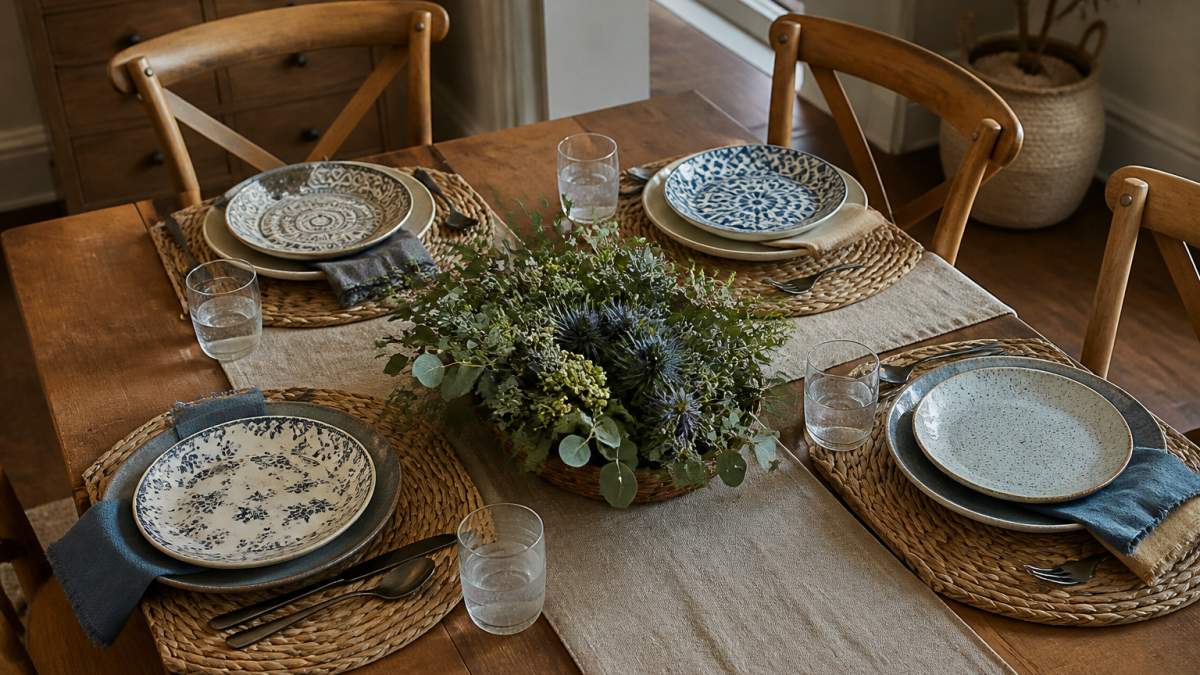
Try these table setting ideas:
- Pattern on the plate, texture underneath: a checked bowl over a woven charger or linen runner
- Cloth napkins with a visible weave folded simply beside the plate
- A matte centerpiece like a ceramic vase or wooden bowl against glossy dishware
- One organic touch: a sprig, a stem, or a single bloom laid across the plate
The contrast is the point. A glossy glaze next to rough linen, or a bold check next to a plain wood surface, gives the eye something to move across.
Our Courtly Check Everyday Pasta Bowls, Set of 4 are a natural fit here. The wide bowl shows off the hand-applied check, and the durable stoneware handles everything from pasta night to a buffet. Pair them with a textured runner and a low centerpiece, and the pattern does the decorating for you.

Dinnerware Color Combinations That Work for Any Occasion
Strong dinnerware color combinations follow one rule: pick a dominant color, a supporting color, and a metallic accent. Three notes, no more. That formula works for a holiday dinner and a casual brunch alike.
Here are combinations that hold up across occasions:
- Black and white with gold: crisp, formal, and easy to dress up
- Cream, sage, and warm wood: soft and natural for daytime gatherings
- Navy, white, and brass: classic and a little coastal
- Terracotta, ivory, and bronze: warm and earthy for fall tables
Keep the metallic consistent. Mixing silver and gold on the same table can work, but it takes confidence. For most hosts, one metal repeated across flatware, glassware, and accents reads as polished.
Building a Tableware Collection One Layer at a Time
Building a tableware collection is a marathon, not a shopping spree. The hosts with the most beautiful tables usually bought slowly, adding one layer at a time as occasions came up.
Think in layers:
- Base layer: dinner plates and everyday bowls
- Accent layer: salad plates, pasta bowls, and small serving pieces
- Detail layer: pinch bowls, mugs, and specialty dishes
- Finishing layer: linens, glassware, and centerpieces
Buy the base first, then add one accent piece per season or occasion. This keeps the collection coherent and spreads the cost over time.
Small pieces are the easiest next step. Our Courtly Check Everyday Pinch Bowls, Set of 2 are a low-commitment way to add a pattern accent for dips, olives, or spices. They are made from the same durable stoneware as the rest of the collection, so they fit right into an existing set.
The thing nobody tells you about collecting: restraint matters more than volume. A tight, intentional collection always looks better than a crowded cabinet.
Common Styling Mistakes That Flatten a Unique Tableware Set
Even great pieces can fall flat with the wrong styling. These are the mistakes we see most often, and how to fix them.
| Mistake | Why It Flattens the Table | The Fix |
|---|---|---|
| Everything matches exactly | No focal point, no personality | Add one contrasting piece |
| Too many patterns at once | The eye has nowhere to rest | Limit to one large and one small pattern |
| Tall centerpieces | Blocks conversation across the table | Keep centerpieces low or narrow |
| All one texture | Looks flat in photos and in person | Mix glossy, matte, and woven |
| Overcrowded settings | Feels cluttered, not styled | Leave space between each place |
| Ignoring lighting | Colors look dull at dinner | Use warm, low light and candles |
Watch out: the most common mistake is buying a full matching set and stopping there. It feels complete, but it leaves the table with no story to tell.
A second trap is over-decorating. More pieces do not equal more style. Edit as hard as you add.
Choose Your First Unique Tableware Pieces at House of Moseley
Styling a table starts with one good decision: choosing pieces with real character and building around them. At House of Moseley, we hand-pick tableware and decor that give your table a point of view, whether you are setting a holiday dinner or a quiet weeknight meal.
Our curated selection includes timeless stoneware, patterned pieces, and the small accents that pull a table together. We also offer a wedding registry for couples who want to build a collection that lasts.
Start with a single piece you love. Then layer slowly, mix with intention, and let the table tell your story.
Frequently Asked Questions
How do you mix and match dinnerware sets so the table looks intentional?
Pick one anchor element, such as a patterned plate or a single color family, and let everything else support it. Keep scale consistent so pieces feel related, repeat a color at least twice across the setting, and vary texture rather than pattern. A checked stoneware plate paired with a solid bowl in the same palette reads as deliberate, while two unrelated bold patterns compete. Start with two sets and add a third only once the first pairing feels settled.
What dinnerware color combinations work best for a styled table?
Neutral bases with one saturated accent are the easiest to live with: cream or white plates, a black-and-cream check, and a warm metallic or deep green accent. Tone-on-tone layering, like ivory, sand, and taupe, looks quietly luxurious for dinner parties. If you want contrast, pair a warm color with a cool one at the same intensity, such as terracotta and slate blue, so neither dominates the table.
How many pieces do you need for one place setting?
A complete place setting usually includes a dinner plate, a salad or lunch plate, a bowl, and a glass, with flatware alongside. For everyday use, four to six settings cover most households. When building a tableware collection, add serving pieces and specialty bowls separately so you can expand without rebuying the basics. Two sets of four lunch plates plus one set of pasta bowls gives you flexibility for casual and formal meals.
Can you mix different dinnerware materials and finishes on one table?
Yes, and doing it well is what makes unique tableware look collected rather than bought in one trip. Combine stoneware with glass, or matte with glazed finishes, as long as the shapes share a similar weight. Keep metals consistent within a single setting so the mix reads as a choice. Dishwasher- and microwave-safe stoneware works well as the base layer under glass or ceramic accents.
Ready to build a table worth gathering around? Explore our curated tableware collection and find the focal piece that speaks to you. Get started with House of Moseley and set a table that feels unmistakably yours.
