
Last Updated: October 23, 2026
Quick Summary
Luxury furniture worth the higher price tag depends on your situation. A luxury sofa costing $1,500 and lasting 15 years costs about $100 per year, while a $400 budget sofa lasting three years costs $133 per year. The investment makes sense for pieces you use daily and plan to keep long-term, but less so for temporary spaces or trend-driven purchases.
- Luxury furniture uses solid hardwood frames with mortise and tenon joints, while budget furniture uses particleboard held together with staples and glue.
- High-density foam in luxury pieces maintains shape through years of use, whereas low-density foam in budget furniture flattens within a few years.
- Quality sofas, dining tables, and beds are worth investing in due to daily use and 15 to 20-year lifespans, while trendy accent pieces are better purchased at mid-range prices.
- Luxury furniture can be repaired or reupholstered to extend its life, whereas budget furniture with broken frames is typically discarded.
- Consider your timeline, usage patterns, design preferences, and maintenance capacity before deciding if luxury furniture fits your needs and budget.
Table of Contents
- The Real Cost of Luxury Furniture: What You're Actually Paying For
- Luxury Furniture vs. Regular Furniture: Where the Differences Matter
- How to Tell If a Sofa Is Well Made: Quality Indicators That Justify the Investment
- Materials and Construction: The Foundation of Durability
- How Long Does Quality Furniture Last: Lifespan and Cost Per Year
- Best Furniture to Invest In: Categories That Hold Their Value
- Making Your Decision: Is Premium Furniture Right for Your Home?
- Frequently Asked Questions
The Real Cost of Luxury Furniture: What You're Actually Paying For
When you're shopping for furniture, the price difference between luxury and budget options can feel shocking. A luxury sofa might cost three times what a standard one does. But is luxury furniture worth the higher price tag? The answer depends on what you're actually buying.
The price premium isn't arbitrary, it reflects real differences in materials, construction, and longevity. Understanding those differences is the first step to deciding whether luxury furniture makes sense for your home.
The core question isn't whether luxury furniture costs more. It obviously does. The real question is whether that extra cost translates into proportional value. For some buyers, it absolutely does. For others, a mid-range piece serves their needs perfectly well. The key is knowing which category fits your situation.
| Factor | Budget Furniture | Luxury Furniture |
|---|---|---|
| Frame Material | Particleboard, engineered wood | Solid hardwood, kiln-dried |
| Joinery | Staples, glue | Mortise and tenon joints, dowels |
| Cushioning | Low-density foam | High-density foam, down fill |
| Upholstery | Synthetic blends, thin fabric | Natural fibers, premium leather |
| Expected Lifespan | 3-5 years | 10-20+ years |
| Repairability | Limited | Reupholstery, frame repair available |
Luxury Furniture vs. Regular Furniture: Where the Differences Matter
The gap between luxury furniture and regular furniture isn't just cosmetic. It starts with what you can't see: the frame, the joints, the internal structure.
Budget furniture often uses particleboard or engineered wood for the frame. These materials are cheaper to produce and lighter to ship, but they compress over time. Staples and glue hold pieces together, and once those fail, the furniture is essentially done.
Luxury furniture typically uses solid hardwood frames. Kiln-dried wood resists warping and cracking. Joints are built using traditional woodworking methods like mortise and tenon construction or wooden dowels. These joints are stronger and more durable than staples alone.
The same principle applies to cushioning. Budget sofas use low-density foam that flattens quickly under regular use. Luxury pieces use high-density foam or combinations of foam and down fill. High-density foam maintains its shape and support through years of daily sitting.
Upholstery matters too. Budget furniture often uses synthetic blends or thin fabrics that pill, fade, and wear visibly within a few years.
How to Tell If a Sofa Is Well Made: Quality Indicators That Justify the Investment
Before you commit to a luxury furniture purchase, you need to know what to look for.
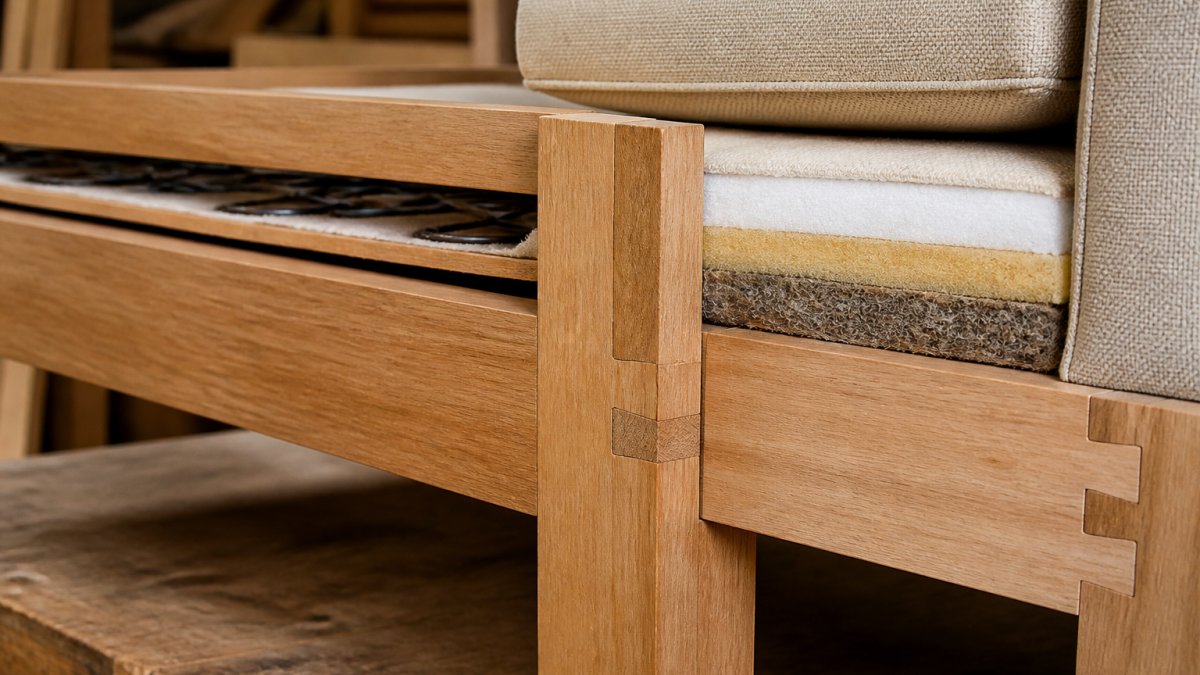
Start with the frame. Flip the sofa over or look underneath if you can. Solid hardwood feels dense and heavy. Particleboard feels light and hollow. Run your hand along the joints.
Check the cushions. Press down on the seat. Does it bounce back immediately, or does it stay compressed? High-density foam bounces back. Low-density foam stays flat.
Look at the stitching. Seams should be tight and even. Stitching should be reinforced at stress points like corners and arm junctions. Loose or uneven stitching indicates rushed manufacturing.
Ask about the legs. Are they solid wood or attached with screws? Legs attached with wood screws into solid wood are a good sign. Legs glued on or attached to particleboard are not.
Feel the fabric or leather. Quality upholstery feels substantial. Run it between your fingers. Does it feel thin and papery, or does it have weight and texture? Thicker fabric resists pilling and fading.
Materials and Construction: The Foundation of Durability
The materials used in furniture construction directly determine how long it will last and how well it will perform over time.
Solid wood frames, particularly kiln-dried hardwoods like oak, maple, or walnut, resist warping and cracking. Kiln-drying removes moisture that would otherwise cause the wood to shift and shrink.
Joinery is where craftsmanship shows. Mortise and tenon joints, where one piece of wood fits into a slot in another, create incredibly strong connections.
Cushion construction matters for comfort and longevity. High-density foam maintains its shape through thousands of sitting cycles. Lower densities compress and flatten. Down fill, often combined with foam in luxury pieces, adds softness and adjustability.
Upholstery fiber content affects durability and maintenance. Natural fibers like linen, wool, and leather develop character over time, they may show wear, but they age well and can be professionally cleaned or reupholstered.
At House Of Moseley, our curated furniture selections prioritize these foundational elements. The Muuto Sofa/Ottoman Gray, for example, combines Scandinavian design with versatile functionality.
How Long Does Quality Furniture Last: Lifespan and Cost Per Year
This is where the math often favors luxury furniture. A budget sofa might cost $400 and last three years. That's about $133 per year. A luxury sofa might cost $1,500 and last 15 years. That's $100 per year.
But the real calculation is more complex. It includes not just purchase price, but also replacement cost, repair costs, and the value of not having to shop for furniture repeatedly.
Budget furniture that needs replacing every three to five years means you're shopping, deciding, waiting for delivery, and dealing with disposal every few years. That's time and stress, not just money. Luxury furniture that lasts 15 to 20 years means you buy once and enjoy it for decades.
Repair and reupholstery costs also factor in. A luxury sofa with a damaged leg can be repaired for a few hundred dollars. A budget sofa with a broken frame is typically discarded. A luxury sofa with worn upholstery can be reupholstered, extending its life another decade.
Consider also the hidden cost of aesthetic fatigue. Budget furniture often looks dated quickly. Luxury pieces, especially those with timeless design, remain attractive and relevant for years. You're not embarrassed to have guests over, and you're not tempted to replace it just because it feels outdated.
Best Furniture to Invest In: Categories That Hold Their Value
Not all furniture categories offer the same return on investment. Some pieces are worth the luxury price tag. Others are better purchased at mid-range price points.
Sofas and sectionals are excellent investments. A well-made sofa can last 15 to 20 years, which justifies a higher upfront cost. The Kilim Chair at House Of Moseley, constructed with 100% Cotton, exemplifies this category.

Dining tables are another strong investment. Quality wood tables develop character over time. They can be refinished if they become scratched, and they hold their value well. A solid wood table lasts generations.
Beds and mattresses deserve investment. You spend a third of your life on them. Quality construction affects your sleep, your health, and your mood.
Accent pieces, benches, side tables, chairs, can go either way. If you use them daily, invest in quality. If they're occasional use, mid-range options work fine.
Coffee tables are worth investing in if they're central to your living room. The Revival Coffee Table, with its beautifully curved wood top and iron legs, combines function with design.
Avoid luxury pricing for pieces you'll replace frequently due to style changes or pieces you use minimally. Trendy accent chairs, seasonal decor, and rarely-used guest furniture don't justify premium prices.
Making Your Decision: Is Premium Furniture Right for Your Home?
The answer to whether luxury furniture is worth the higher price tag depends on several personal factors.
First, consider your timeline. Are you furnishing a space you'll live in for decades, or are you in a temporary living situation?
Second, evaluate your usage patterns. Furniture that gets heavy daily use, sofas in active households, dining tables where families eat multiple meals daily, justifies investment. Pieces that sit unused most of the time don't.
Third, think about your aesthetic preferences. Do you gravitate toward timeless designs that stay relevant for years, or do you follow trends? Timeless pieces justify luxury investment.
Fourth, assess your maintenance capacity. Luxury furniture often requires professional cleaning or repair. If you're willing and able to invest in maintenance, luxury pieces last longer.
Finally, consider your budget honestly. Luxury furniture should be an investment you can afford without financial strain. If the price makes you anxious, it's not the right choice, regardless of quality.
At House Of Moseley, we help customers navigate these decisions by offering hand-picked pieces that represent genuine value. Whether you're investing in a statement sofa, a coffee table that anchors your living room, or accent pieces that reflect your personal style, we focus on pieces designed to last and to matter.

Frequently Asked Questions
Is luxury furniture worth the higher price?
Luxury furniture often justifies its cost through superior craftsmanship, premium materials, and extended lifespan. A well-made luxury sofa or coffee table can last 15-20+ years with proper care, whereas budget alternatives typically need replacement within 5-7 years. When calculated as cost per year, luxury pieces often cost less over time. The decision depends on your usage patterns, budget, and how long you plan to keep the furniture.
What makes luxury furniture different from regular furniture?
Luxury furniture differs in frame construction, materials, and craftsmanship. High-end pieces use solid hardwood frames with mortise-and-tenon joinery, while budget furniture often uses particleboard or stapled joints. Premium upholstery features higher foam density, natural fabrics like leather or cotton, and hand-stitched details. Luxury brands also offer customization and design that transcends trends, making them functional investments rather than disposable purchases.
Does expensive furniture last longer?
Yes, when you're comparing genuinely premium furniture to budget alternatives. Quality construction, durable materials, and proper joinery extend lifespan significantly. A luxury sofa with high-density foam and hardwood frame can endure 15-20 years of daily use, while budget sofas with lower-density foam and weak frames may fail within 5-7 years. Durability also depends on maintenance, luxury pieces designed for repairability and reupholstering add decades to their useful life.
What furniture is worth spending more money on?
Invest in pieces you use daily: sofas, beds, dining tables, and chairs. These items absorb wear and tear, so durability matters most. Coffee tables and benches that anchor a room's design also benefit from premium craftsmanship and materials. Accent pieces like the Kilim Bench or Revival Coffee Table reward investment through timeless design and solid construction. Skip premium pricing on furniture you rarely use or plan to replace in a few years.
How can you tell if furniture is high quality?
Examine the frame material, solid hardwood is superior to plywood or particleboard. Check joinery: mortise-and-tenon joints and corner blocks indicate quality, while staples suggest budget construction. Feel the cushioning: press down and it should spring back quickly, signaling adequate foam density. Look at stitching, even, tight seams indicate quality. Review the warranty and return policy; luxury brands stand behind their work. Ask about materials: natural fabrics, genuine leather, and high-density foam all signal investment-grade furniture.
The question of whether luxury furniture is worth the higher price tag doesn't have a universal answer. It depends on your home, your lifestyle, and your values. But if you're choosing between a sofa that lasts three years and one that lasts 15, the math often favors quality. At House Of Moseley, we believe in helping you find pieces that transform your space and stand the test of time. Explore our curated collection of hand-picked furniture and discover pieces that tell your story.
